
Understanding the beauty and complexity of the aging brain
Learn
Brain health, aging, memory, and resilience. Clear explanations with an honest line between what the evidence supports and what it doesn't.
Treat
Find clinical care pathways for memory disorders, Alzheimer’s disease, rare and genetic dementias, and optimal brain aging.
Discover
Explore tangl, the research lab decoding tau pathology and the biology of resilience through human genetics, perturbable models, and multimodal AI.
The lab and the people behind it
About tangl
The Translational Aging Neurogenetics Laboratory (tangl) decodes the molecular logic of the aging brain. tangl is an AI-native research group designed to connect human genetics, cognitive assessment, and perturbable models to uncover what it means for the brain to be resilient.
tangl is a part of the Center for Human Genetics and Genomics at New York University Langone Health, in Manhattan, New York.
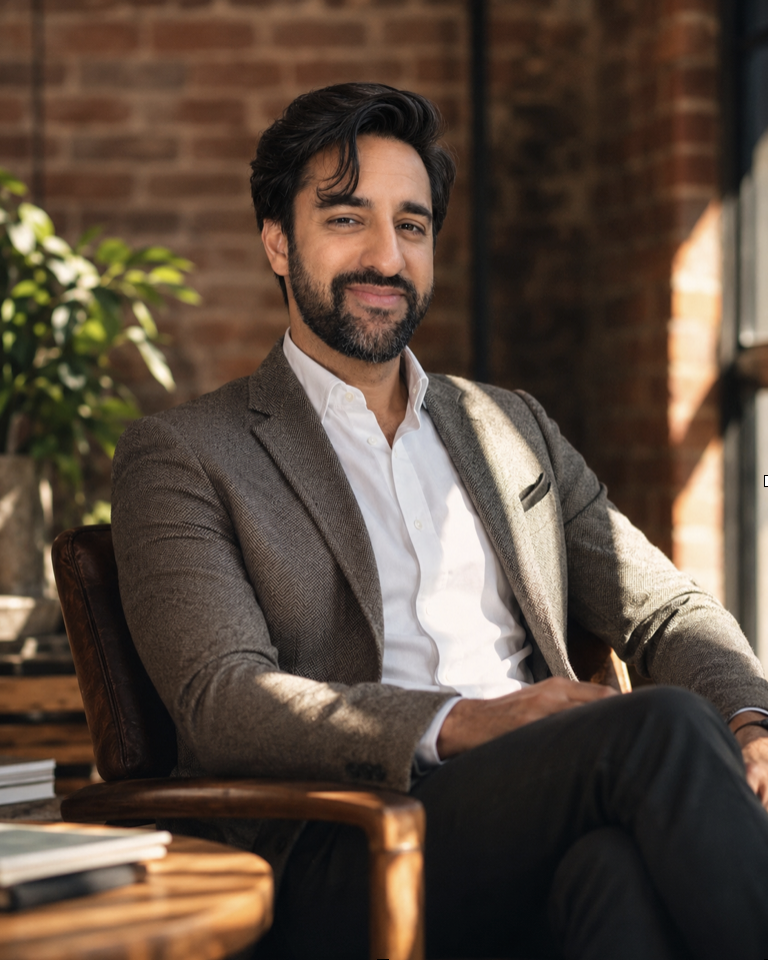
About Dr. Anil
Dr. Anil is a neurologist and physician-scientist focused on healthy brain aging, Alzheimer’s disease, rare and genetic dementias, and cognitive resilience.
In the clinic, he helps patients and families make sense of memory changes, atypical symptoms, genetic risk, biomarkers, and emerging treatment options. In the lab, he studies why some brains remain resilient while others become vulnerable to neurodegeneration and dementia.
He is a graduate of the Medical Scientist Training Program at Northwestern University, and completed his residency in Neurology and postdoctoral training in Behavioral Neurology from the University of Pennsylvania.
Learn
This future resource will explain memory, aging, Alzheimer’s disease, rare dementias, biomarkers, APOE and genetic risk, cognitive resilience, and what is evidence-based versus speculative in the brain-health and longevity space.
For now, explore trusted resources from leading organizations:
Brain Health 101 is under development.
Treat
Patient Navigator
A guided way to find the right care pathway. This tool is coming soon — for now, here's what's ahead.
Coming Soon
Memory Disorders & Alzheimer's
Comprehensive evaluation for memory changes, MCI, and Alzheimer's disease.
Rare & Genetic Dementias
FTD, PPA, DLB, PSP, CBS, and familial dementia syndromes.
Optimal Brain Aging
Proactive, precision brain-health guidance for elevated genetic risk.
Discover
tangl
translational aging neurogenetics laboratory.
The name is also a play on tau tangles: abnormal tau protein aggregates that form in the brain in Alzheimer's disease and related age-associated brain conditions.
tangl studies the molecular logic of brain aging, tau pathology, and cognitive resilience. The lab asks why some brains remain resilient while others become vulnerable to neurodegeneration and dementia. These differences may be due to a combination of genetics, experiences, and behaviors. We believe that thoughtfully-designed machine learning tools can help discover better ways to diagnose, treat, and ultimately prevent these diseases.
Research Areas
Tau [the pathology]
Different tau isoforms, conformations, and distributions produce strikingly different diseases. We map how tau emerges, spreads, and tracks with what patients actually experience.
Resilience [the protection]
Some brains hold onto cognition while carrying substantial pathology. We look for the molecular programs that shield them, then rebuild those programs in cell models to find out which ones are causal.
Aging [the process]
Not every aging brain is on the same trajectory. We study what separates ordinary aging from the earliest departures toward disease.
Approaches
Neurogenetics and epigenetics
We use inherited and acquired variation as the entry point into each question.
Machine learning
We find latent structure in genetic, biomarker, and clinical data that don't naturally sit in the same frame.
Biomarkers and precision diagnosis
We translate findings into blood and digital measures to sharpen diagnosis, make trials smaller and faster, or improve predictions about risk and treatment response.
Lab values
The aging brain is too complex for any one discipline. TANGL is a home for people who cross boundaries between clinic and lab, genes and experience, computation and experimentation.
Together, we strive to understand why some brains decline while others remain resilient.
Our Team
Building a small, interdisciplinary team
Coming Soon
Join The Lab!
tangl is new. The people who arrive first will shape what it becomes across questions, methods, culture, and standards.
We're recruiting postdocs, computational biologists, data scientists, and research technicians. We're equally interested in people arriving by unconventional routes: physicians who found their way to code, engineers pulled toward biology, anyone with a serious quantitative background and a real reason to care about the aging brain.
You don't need prior neurodegeneration experience. You do need curiosity that survives contact with messy data.
Write with a short note about your background, what you can actually do, and the question in brain aging you'd most want to answer.
Please do not submit personal medical information through this website.
This site is for educational and informational purposes only and is not a substitute for medical advice, diagnosis, or treatment. Clinical care is provided exclusively through Dr. Anil’s NYU Langone Health clinical practice and NYU Langone Health’s official appointment system.
Get in Touch With Dr. Anil
For general inquiries, newsletter updates, or non-urgent contact, use the form. Interested in joining TANGL? Include a brief note about your background, interests, relevant skills, and the questions in brain aging that excite you.